New Book!
Zettelkasten for
Fiction Writers
Where Imagination Finds Order
Get The Book For (Pretty-Darn-Close To) Free!
Grab yours less than half price until my print run is Gone!
(Full Retail $69.95)
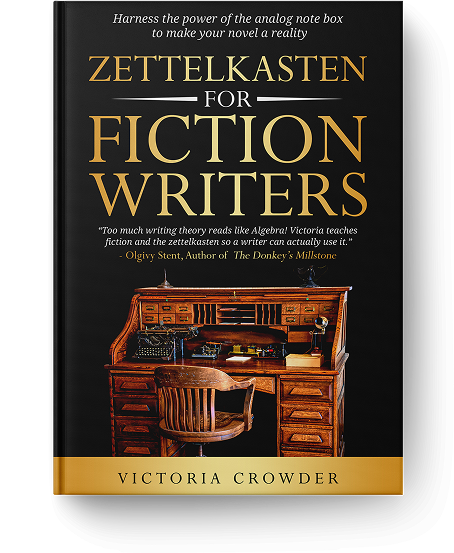
“Too much writing theory reads like Algebra! Victoria teaches fiction and the zettelkasten so a writer can actually use it.”
—Olgivy Stent
Author of 'The Donkey's Millstone'
“Victoria is masterful explaining these methods of novel plotting. Everything is clear and concise.”
—Betsy (Mary Elizabeth) McMillan
Writer, Editor, Out of the Box Thinker
“Received my book in today’s post, and it is awesome! It looks so good.
Planning to shut off my phone this evening and dive into some uninterrupted book time. Thank You!”
—James
Writer
Discover the Real A.I. Revolution... that is, the AntiNovelist Institute
Imagine for just a minute...
There is a group of renegade writers who are happily working on their novels, blissfully unaware of the lifeless drudgery of uninspired writing.
They aren't glued to soul sucking glowy screens or endlessly querying CrapBots how to "Outline Your Novel in 30 Days".
Nope.
They have taken the first exit OFF of the information super highway and are hanging out with me at the AntiNovelist Institute -- the REAL A.I.
This is my personal space in the LiLLiPub.org online community where my 'Zettelkasten for Fiction Writers' book tribe shares ideas, discovers hidden story writing superpowers and practices getting in 'flow' together during regular writing sprints with ME!
As a book owner you receive lifetime access to my personal space in LiLLiPub AND a 30 day free trial for the wider LiLLiPub community!! WOOHOO!
We self proclaimed note card nerds have built lots of places for word-smithing, book clubbing and just generally supporting one another outside the noise of a ChatCrap driven monkey race to writing with no heart or soul.
These AntiNovelists are writing their dream books while living the meaningful, contemplative Writer’s Life.
Can you guess what their secret is?
I'll give you a few hints...
It does NOT involve CrapGPT...
It does NOT involve cranking out a zillion “freeby” loss leader books for Amazon to devour..
It does NOT involve being confused or frustrated by having to adopt "digital tools" which only waste your writing time because you can't figure out how to find your dang drafts...
And no, it doesn't involve thousands of dollars for a fancy “book coach”...
In Zettelkasten for Fiction Writers, I detail my revolutionary writing model by taking you through my journey of how I discovered it all.
After you finish the book, you will understand the organization and writing model that makes reading, research, brainstorming and writing that novel easier and more FUN than EVER!
It's a shame that every other kind of artist gets paints, and charcoal, and brushes, and dreamy cold pressed paper and... STUFF to play with and drive creativity.... And the lonely writer gets a Laptop. Yucko!!
My book gives you back permission to play with REAL tools like note cards in any color you want! And colored pens or brush pens... even fountain pens and creamy ink in any color, OH MY!!
We're going to make writing FUN together!
That's the REAL A.I. way!
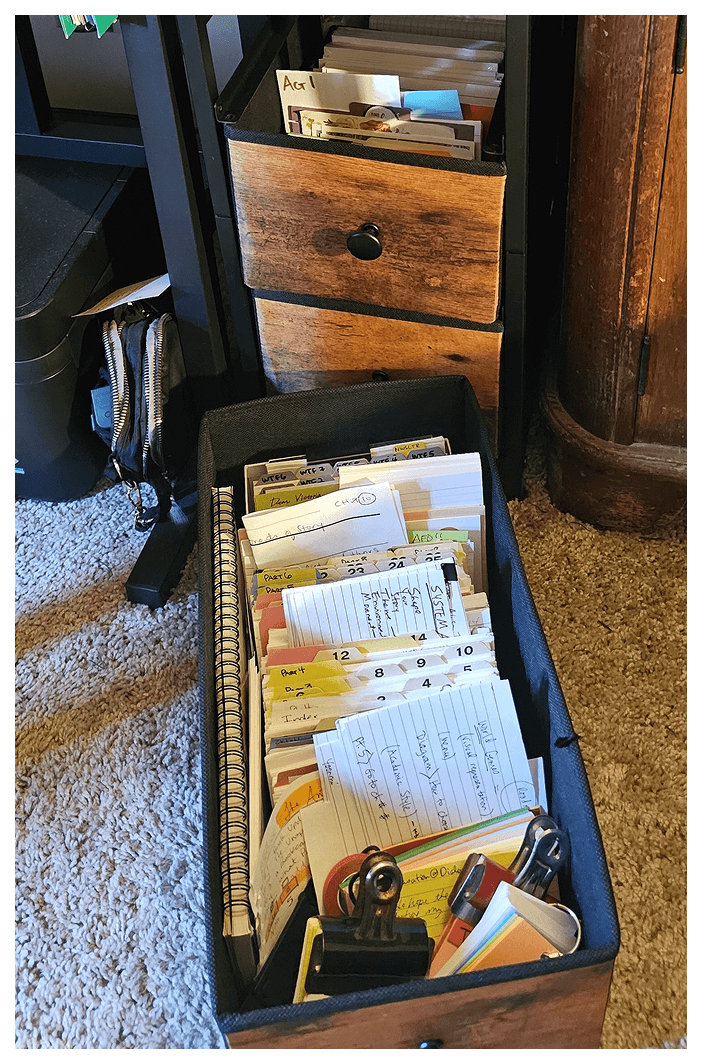
A Way to Organize Your Imagination
(To Actually Get Your Writing Done)
Get ready for a wealth of transformations in your writing process as you work through this book...
Your Wild Imagination Will Find Order
If you are one of us library nerds who love reading, exploring and learning (and then incorporating your discoveries into your fiction writing) then you've GOT the imagination part down!
But if the wheels come off the typewriter as you try to sort, remember, organize and access ALL of that information -- then the analog zettelkasten is a fantastic tool for you to organize and grow all of those ideas.
Imagine creating a consistent and reliable note box of brilliant ideas that you can actually find and use. Your writing will simply explode!

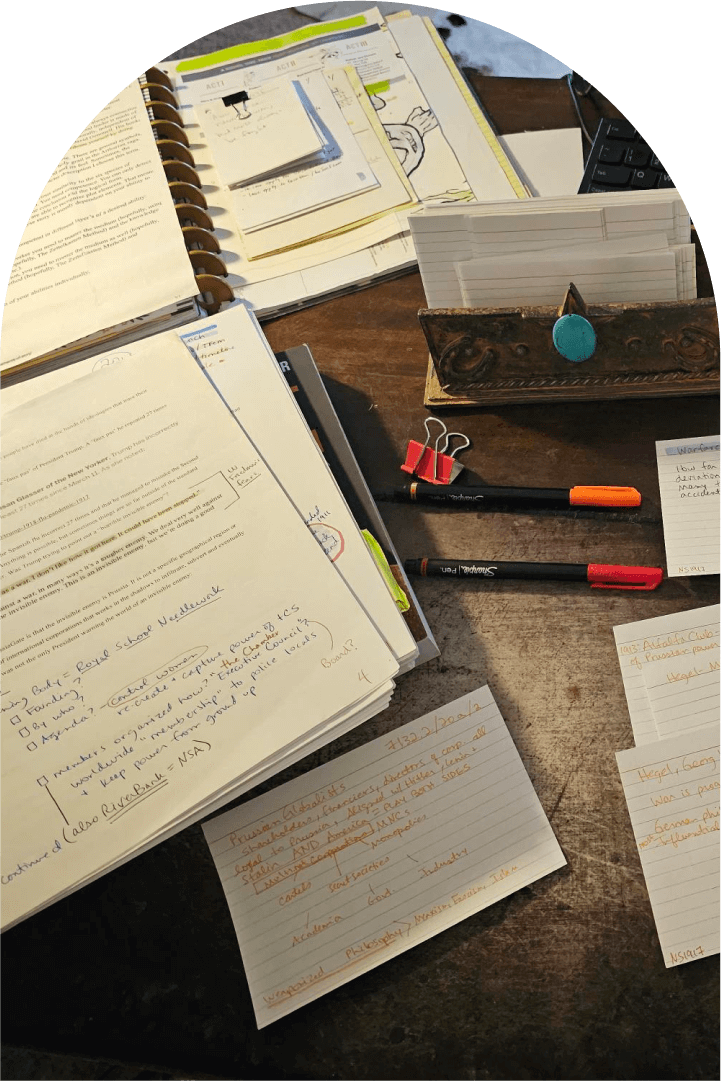
You Will Harness the AntiNovelist Process
With the AntiNovelist tools that I've carefully created for you, you will be ready to begin a regular practice of feeding your writing. Imagine moving through each day with your writer's eye primed for capturing details and saving them in your own analog system for use later.
No more scribbles lost on napkins, no searching for that plot idea you made a note of and misplaced. No more frustration with knowing you have a story to tell but not being able to get it sorted into some kind of order and then written.
You Will Naturally Attract Your Super Fans
Your readers ARE out there. You just have to write the story you most want to tell them, in the form that most appeals to you with commitment, enthusiasm and craft. This book is your blueprint for finally getting your book written. After all, fiction is simply bringing order to your imagination so you can share it on the page.
The WORLD is your note card and your zettelkasten becomes your personal superpower for turning it all into your novel!


Ready? Let's Uncover Your Unique Author Voice!
One of the advantages of implementing the zettelkasten is that you are buiding (in real time) a partner to communicate and "work" with. Because your note box is collaged in a methodical way from your own imagination and research, it is always relevant and never fails to spark connections and ideas. This flow of thinking and writing will develop your writer's voice and style like NOTHING ELSE!
You Will Master Reading to Fuel Your Fiction
Whether you need to simply crank out a short story for class or you're finally tackling writing that novel... or maybe you have a great romance/fantasy hybrid idea because your family has a generational story that could become an epic historical saga... the AntiNovelist process can make you an absolute beast when it comes to curating, storing and integrating creative writing research.


Embrace the Analog Writing Revolution
By the way... 0% of this book was created using digital "A.I."
This book was researched in books that I have had since high school and college (like, 1985 to 1992 -- seriously), and books my dear friends and research librarians suggested in the 2000s.
I also used books and papers recommended by some of the respected authors and writing teachers I know [JQ and Library Liz... looking at YOU!].
The original research text was written out Old School. That means by hand on 4x6” notecards and then in college ruled disc bound notebooks.
It was then rewritten and revised between July 9, 2024 and August 13, 2025 in a desktop application/word processing program by me, the AntiNovelist.
Then, it was printed out and edited page by page using a retractable fountain pen filled with Heart of Darkness black ink, my old Cross felt tip, Bic stik pens in red, blue and black, and Prismacolor dual tip brush pens in multiple colors.
Finally, it was edited as a very long word document by my amazing editor a.k.a. ‘The SheBeasty’.
The whole thing was created the Old Way. The Slow Way. (Screw You A. I.)
This is the AntiNovelist Way.
What all do you get??

530-Page BEAST Book (Mailed to Your Doorstep)
Over 80 sections contained in 16 Chapters, with about a zillion recommended resources included in Works Consulted.

Handcrafted, Every Word (No AI or CrapGPT Used in The Making of This Book)
I wrote this book longhand. Using one of my favorite Cross felt tip pens, college ruled paper, 4x6 inch notecards and my tasty brains. Every word was wrangled with purpose by me and my editor "The SheBeasty" to help YOU build a workable system to breathe life into your fiction writing.

Private Community Access to Other Independent Writers and Solopreneurs
After you purchase the book, you will be emailed a link to access my private community of AMAZING writers and authors who hang out in my digital Library, attend our workshops, and MAYBE even publish with us (when you get your dang book written!)!
“Writing dream books. Living the Writer’s Life.”
— Victoria Crowder
Join me on the
Adventure of a Lifetime!

How It Works
Zettelkasten for Fiction Writers

Frustrated, Disorganized and Stuck
You Try to Write a Book Without Proper Organization or a System in Place to Support You
You Begin to Question Your Ideas and Direction for Your Book
You Invest Loads of Money in “Professional Writing” Tools and Courses That Promise “Write Your Book in 30 Days” or “Coaching Your Book to Success”
You Finally Decide on a Path Forward But Struggle with the Progress and Pacing of Your Book
You Stall While Trying to Decide If You Should Outline or Write by the Seat of Your Pants, or Both
You Waste Months Researching “Plot Structure” and End Up Re-Plotting Your Book -- Twice
After Being Overwhelmed by Your Plot Debacle, You Go Down a “Character Development” Rabbithole
Your Characters Start to Come to Life
You Find Some Momentum and Begin Writing Again
You Spend a Ton of Time Looking for Notes, Tracking Down journals Full of Ideas and Re-tracing Your Footsteps Through the Quagmire of Plot Structure
You Decide Your Shitty First Draft is Kind of Done and You Read it to a Trusted Friend
On Re-reading it Yourself, You Scrap Your Draft Completely
You Can’t Organize Your Thoughts Enough to Track Your Characters and Your Ideas Seem Way Too Fuzzy
You Fall into a Pit of Despair
After a Few Months, You Gain Some Newfound Inspiration from a Book You Have Read and Start Over Again
Somehow, Maybe, You Finish Most of a First Draft
You Tell Your Friends, Family, and Clients About Your Upcoming Book to Try and Get Momentum
After Another Year Trapped in the Frustration of Hard Work and Stalling Out, You Still Can’t Get it Finished, or Worse: It’s Finished but You Don’t Know What To DO With It
The Thought of Your Unfinished Book Remains a Painful Memory for The Rest of Your Life

You Recognize You Need a Fresh Start with a Clear Path Forward
You Write Your Book in Just Over a Year Following a Proven System of Research, Brainstorming, Organization and Writing
You Realize You’ve Written an Engaging and Well Constructed Book
You Leverage Your Newfound Community to Attract a Small Tribe of Superfans
This is the Beginning of Your Author Brand
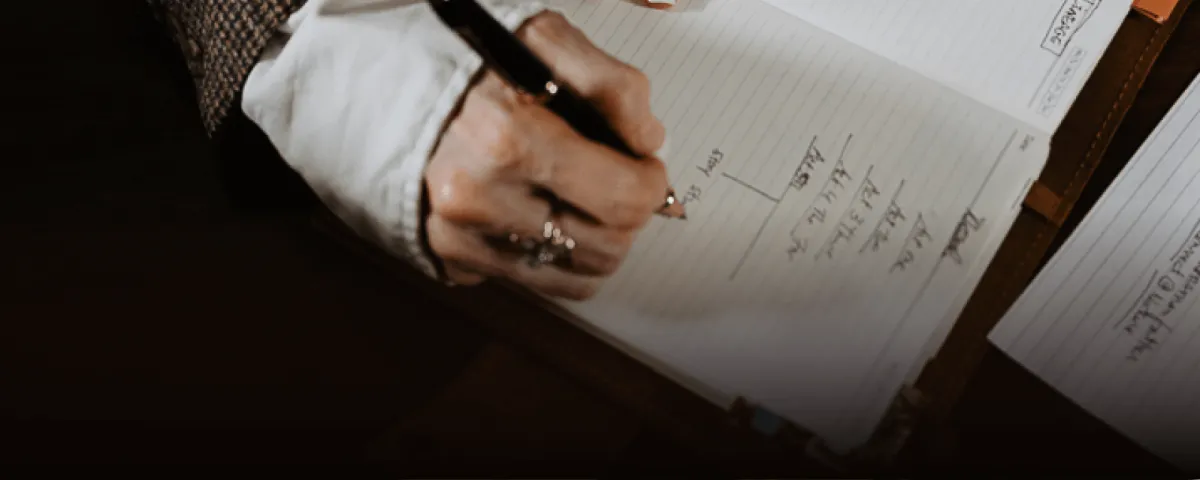
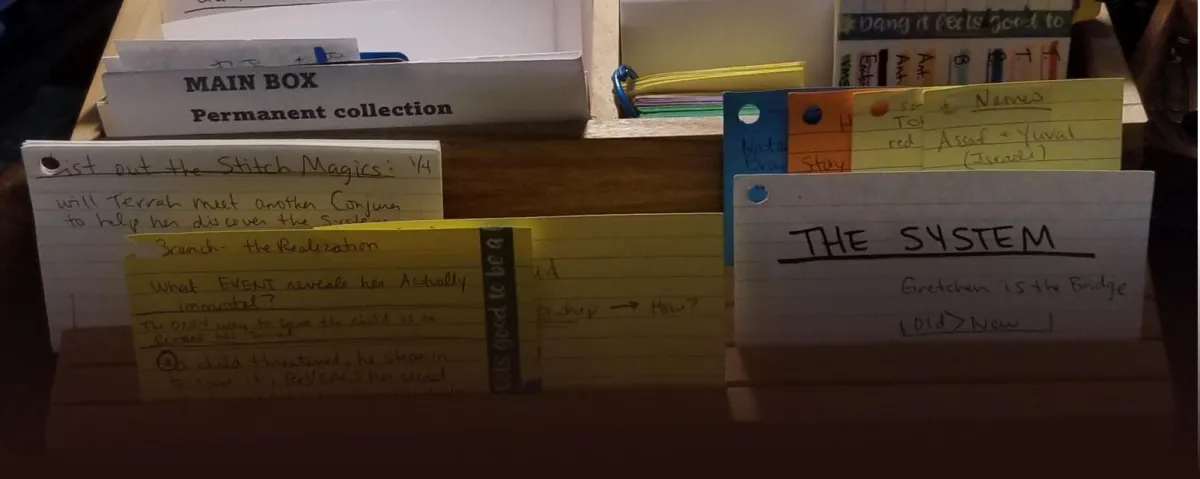
Discover the Power
of Zettelkasten Fueled Writing
The New Way to Research, Organize and thrive as a REAL Writer.
Hi There,
I’m Victoria, author of Zettelkasten for Fiction Writers.
Before discovering the Zettelkasten for Fiction Writers system, I had tried everything under the sun. Honestly, my goal was to replicate my debater’s lifestyle in college, where I spent hours in the library reading books, writing, and thinking. I wanted to do this——while also making a decent living so that I didn't have to stress out about money.
To accomplish this, I tried blogging, coaching, and online course-creation.
Nothing worked. I failed miserably at all of those things. Mostly I discovered I hated messing with computers and websites. I just wanted to write my books! But I was disorganized with drafts and ideas all over the place! I had NO traction.
And then... Plot Twist!
Two years ago, I discovered the organization and writing system that changed my life.
Literally.
I look forward to getting this book into your hands.
Warm regards,
Victoria Crowder – the AntiNovelist
"A Woman on a Cattle Ranch Rustling Up a Posse of Note Card Nerds"
About The Book
Why I'm Giving This Beast Away at Half Price...
(And no, it's not a gimmick.)
I am selling each book at exactly the cost of printing, fulfillment, and shipping, and not a penny more.
Why am I doing this?
DUH! Because... I BELIEVE IN YOU !
This is my investment in your success. So don't flake on me!
Plus, There are two more reasons I'm doing this.
Consider that I spent 395 days researching and engineering how the zettelkasten works for fiction by dissecting how I used it to write my novel in 2021 and 2022. I also memorized the Scott Scheper AntiNet Zettelkasten approach to non-fiction writing based on Niklas Luhmann's work (the Godfather of the Zettelkasten).
Then, I tested it on both new and seasoned writers for viability. THEN, I built a duplicatable system for other fiction writers to get that writing DONE!
So, first, I'm doing this because I don't want you to waste 395 days of your writing time doing this! I've already done the legwork for you. I'd rather you learn the AntiNovelist Way, and just write the novel you're uniquely called to create.
Second, I'm doing this because I've experienced the power of the system firsthand. I've proven it can be done. I used it to write my novel (which had been stalled for over TWO DECADES!) and then I used it to write the Zettelkasten for Fiction Writers for you. A simple note box has literally changed my life. My only regret is that I didn't learn it earlier!
Therefore, my goal is to get this book into as many hands as possible.
The secret bonus reason I'm selling this guide at cost is because I know by transforming your writing, you will be ready for the other tools that I'm developing to transform you even further! We'll get your writing done together!
That's it.
I know the Zettelkasten for Fiction Writers will change your life like it did mine, and I can't wait for you to read it!
Still unsure...?
Take a look inside! I'm literally giving you EVERYTHING!! Seriously... Just check out the Whole Table of Contents!
TABLE OF CONTENTS
Author’s Note from the North Star Cattle Ranch Library
How to Use This Book
PART ONE – INTRODUCTION TO ZETTELKASTEN AND PLOTTING TOOLS
Overview
Chapter 1: Introduction to the Zettelkasten
Setting Up Your Zettelkasten
Items Needed
File Box
Note Cards
Numbering Assignment for Main Cards and Categories
Components of the Zettelkasten: 3 main sections
Bibliography (Bib) Cards
Main Cards
Index
Workflow Architecture for Writing Environment
Early Numbering in My Zettelkasten
Advanced Peek at My Numbering
Creating Categories and Numbering
Other Useful Zettelkasten Sections:
Pool or Collection
Chaos or Dump Box
Orphans
Directory Cards
Installing Scenes or Works in Progress in the Zettelkasten
Story Cards
Student Question: Capturing Details During Writing Using Story Cards
Advanced Maneuver: Indexing Key Words from Multiple Books or Stories
Super Special Advanced Maneuver: the Main Card Capture for a Dream/Idea
Chapter 2 Introduction to Plot and the Plot Box
Introduction to Plot
Types of Plot
Master/Apprentice Plot
Information/Evidence Plot
Underdog Plot/Rags to Riches
Boy and Dragon Egg
Heist
The Plot Box Structure
Building the Plot Box to Live Within Your Zettelkasten
Basic Structure: Hero Journey Aspect
Note on Numbering
Components for a 4 Act Structure Plot Box
Implementing as a Sequencing Tool
32 Folders: a Mirror Set Up of Plot Box
Intro to the VITZ: Variations in the Zettelkasten
VITZ Prompt Cards – Examples
Chapter 3 Plot Modeling: Creating Visual Narrative Form
Systems Thinking
A Story Modeling Language
In Practice
Student Question: Mind Mapping
Organizational Bonus: The Fiction Day Planner
PART TWO – ZETTELKASTEN FOR CHARACTERS
Overview
Chapter 4 -Building the Character Box
Character Notes From Imagination and Observation
Imagination
A Note On Addressing
Observation
Character Development
Character Development cards
Brainstorm/Mind map
Character Aspect collection
Key Players
The AntiNovelist’s Character Development Cards
Direct characterization
Indirect Characterization
Choice
Voice
Creating the Cards
The Cause & Effect Tracker
Plot Modeling the Possible Effects
Research Questions - Tasks
The Spracklen Character Traits
Chapter 5 Character Arc
Types of Character
Primary
Secondary
Tertiary
Types of Character Arc
Static Arc
Positive Arc
Negative Arc
Channel of Character Arc
Internal
External
Relational
Inherency in the Character Arc
Gap
Barrier
Attitudinal
Existential
Deus ex machina
How to Zettelkasten a Character Arc
Chapter 6 Key Players Collection
Key Players Note Cards
Character Toolkit Review – Key Players, Character Development and Character Aspect
Beginning the Key Players Cards - A Collection/Pool
General Story Collection
Addressing the General Key Player Collection
Dedicated Story Collection
Addressing the Dedicated Story Key Player Collection
Key Players Note Cards List
Key Player Character Types
Protagonist
Dual Protagonist - Deuteragonist
Protagonistic Unit
Tool of Opposites
Perception Of Character
Fatal Flaw
Character Wound
Character Misbelief
Character Revelation/Meditation
Antagonist
Antagonistic Forces
Contagonist
Villain
Tool of Opposites
Story Arc
Continuum of Evil
PART THREE - FOUNDATIONS OF FICTION: HOW TO ZETTELKASTEN A NOVEL
Overview
Chapter 7 Introduction to Short Fiction
Traditional Short Fiction
Features of Short-Short or Micro Fiction as a Whole
Word Count Guidelines
Flash and Micro Fiction
6 Word Story
Hint Fiction
Drabble and Dribble
Drabble in Practice – an Example from Draft to Finish
Short Story
Balls – an Example in Practice
NIF – Novella in Flash
Chapter 8 – The Nature of Fiction
Forms of Fiction
Non-linear form
Linear form
What does it all mean?
Simple vs. Sophisticated
Fundamentals of Long Fiction – Tools for Writing
OMDS – the Offering, Milestones and Discoveries, the Settlement
SYSTEM Analysis
The 3 Act Structure
The 3 Act Structure
The 27 Chapters Method (O’Keefe)
Note on 4 Act Structure
Romance Story Structure (Hayes)
Tropes
The Scene Generator
Indexing
Directory Card method
Individual Card Method
The Scene Generator – A Collection
General
Personal Struggle
Questing
Striving
Relationships
Romantic
Spirituality
Politics, Culture
Status Challenge
Self Destruction
Crime
Emotional State
Theme
Chapter 9 The AntiNovelist’s Zettelkasten – A Writing System in 5 Modules
Module 1 – Overview and Building Blocks
Mobile Deck
Zero Draft -Basic Types of Drafts
Outline WIP (Work in Progress) - Critique Partner
Full Draft - Beta Reader
V & A: VOCAB & Action words
Timeline Plotting
Out Cards
Phrase/Thought
Title/Quote/First Sentence
Scenes
Annotation/Short Form
Module 2 – The QUESTER Writing tool
Module 3 - The Experience Collection
Building a collection
A Goal and a Sense of Urgency
Sense of Place
Using the Cards
Experience Collection – Prompt List
UAV: Unique Author Voice
Voice and Tone
Student of Story
Author Voice Directory
Module 4 - MVU: Minimum Viable Unit
Definition
Determining MVU
Module 5 – Building Scenes and Chapters
Scene and sequel/Action and Reaction
Scene Transitions
Examples
Scene Repair
Leading Questions
Pacing
Character Trouble
Plot Armor
Deus ex machina
Head hopping/point of view break down
Character flat/hollow
Dialogue not authentic
Plot Trouble
Progress not being made through narrative
Plot Holes/continuity
Plot Bunnies
Chapter 10 Intro to Zettelkasten for Readers
Review: Numbering – Bib Cards – Main Cards – Index
Building out the system:
Numbering
Bib Cards — Front and Back
The 5 C’s of Story plus Theme
The 8 Plot Point Bib Card
The Character Bib Card
Main Cards
Sub Genres
Index
Identifying Theme - Reminder
Hand Copying as Part of Processing Reading
PART FOUR – EXPLORING NARRATIVE STRUCTURE
Overview
Chapter 11 Narrative Structure
Aristotle
2-3 Act Structure
Trouble with the Midpoint
Challenging Our Assumptions
Kishotenketsu – Non Conflict Eastern Narrative
VITZ as a Tool of Try/Fail or Try/Pay Cycle
Try/Fail Cycle
Adding a Rise/Fall Factor
Chapter 12 Character Driven Narrative
Story Circle – Harmon
Story Genius – Cron
Chiastic Structure
AutoFiction
Chapter 13 Conflict Driven Narrative
Campbell Hero’s Journey
Murdock Heroine’s Journey
Freytag Pyramid
Wells 7 Point Story Structure
George Polit 36 Dramatic Situations
Chapter 14 Non-linear Narrative
Organic Pattern in Narrative
Review: SYSTEM Analysis
Suggested Patterns for Study
Nonlinear Pattern Homework
Vortex Street
Pattern Arrangements to Study
Symmetrical
Asymmetrical
Singular
Repeating
Natural Elements
Objects
Color
Narratology: Narrative Flow
Metrics of Pacing
Flashbacks
Snowflake Method – Ingermanson
Chapter 15 Scriptwriting for Narrative Fiction
Chapter 16 Episodic or Serial Structure
Harmon – The Embryo
L Tolstoy
C Dickens
S Cannon
D Viergutz
Fichtean Curve
PART FIVE – INTRODUCTION TO WORLD STORY
Overview
Chapter 17 Intro to the Art of Story Around the World
Japan
Kishotenketsu: non-conflict short narrative
Germany
Kunstlerroman: artist coming of age, AutoFiction
Latin America
Nonlinear, Multi Point of View
Afterword
Acknowledgements
Works Consulted and Further Reading
Still unsure...?
Take a look inside! I'm literally giving you EVERYTHING!! Seriously... Just check out the Whole Table of Contents!
(Just the 5 writing modules in Chapter 9 are worth GOLD!!)
TABLE OF CONTENTS
- Author’s Note from the North Star Cattle Ranch Library
- How to Use This Book
- PART ONE – INTRODUCTION TO ZETTELKASTEN AND PLOTTING TOOLS
- Overview
- Chapter 1: Introduction to the Zettelkasten
- Setting Up Your Zettelkasten
- Items Needed
- File Box
- Note Cards
- Numbering Assignment for Main Cards and Categories
- Components of the Zettelkasten: 3 main sections
- Bibliography (Bib) Cards
- Main Cards
- Index
- Workflow Architecture for Writing Environment
- Early Numbering in My Zettelkasten
- Advanced Peek at My Numbering
- Creating Categories and Numbering
- Other Useful Zettelkasten Sections:
- Pool or Collection
- Chaos or Dump Box
- Orphans
- Directory Cards
- Installing Scenes or Works in Progress in the Zettelkasten
- Story Cards
- Student Question: Capturing Details During Writing Using Story Cards
- Advanced Maneuver: Indexing Key Words from Multiple Books or Stories
- Super Special Advanced Maneuver: the Main Card Capture for a Dream/Idea
- Chapter 2: Introduction to Plot and the Plot Box
- Introduction to Plot
- Types of Plot
- Master/Apprentice Plot
- Information/Evidence Plot
- Underdog Plot/Rags to Riches
- Boy and Dragon Egg
- Heist
- The Plot Box Structure
- Building the Plot Box to Live Within Your Zettelkasten
- Basic Structure: Hero Journey Aspect
- Note on Numbering
- Components for a 4 Act Structure Plot Box
- Implementing as a Sequencing Tool
- 32 Folders: a Mirror Set Up of Plot Box
- Intro to the VITZ: Variations in the Zettelkasten
- VITZ Prompt Cards – Examples
- Chapter 3: Plot Modeling: Creating Visual Narrative Form
- Systems Thinking
- A Story Modeling Language
- In Practice
- Student Question: Mind Mapping
- Organizational Bonus: The Fiction Day Planner
- PART TWO – ZETTELKASTEN FOR CHARACTERS
- Overview
- Chapter 4: Building the Character Box
- Character Notes From Imagination and Observation
- Imagination
- A Note On Addressing
- Observation
- Character Development
- Character Development Cards
- Brainstorm/Mind Map
- Character Aspect Collection
- Key Players
- The AntiNovelist’s Character Development Cards
- Direct Characterization
- Indirect Characterization
- Choice
- Voice
- Creating the Cards
- The Cause & Effect Tracker
- Plot Modeling the Possible Effects
- Research Questions - Tasks
- The Spracklen Character Traits
- Chapter 5: Character Arc
- Types of Character
- Primary
- Secondary
- Tertiary
- Types of Character Arc
- Static Arc
- Positive Arc
- Negative Arc
- Channel of Character Arc
- Internal
- External
- Relational
- Inherency in the Character Arc
- Gap
- Barrier
- Attitudinal
- Existential
- Deus ex machina
- How to Zettelkasten a Character Arc
- Chapter 6: Key Players Collection
- Key Players Note Cards
- Character Toolkit Review – Key Players, Character Development and Character Aspect
- Beginning the Key Players Cards - A Collection/Pool
- General Story Collection
- Addressing the General Key Player Collection
- Dedicated Story Collection
- Addressing the Dedicated Story Key Player Collection
- Key Players Note Cards List
- Key Player Character Types
- Protagonist
- Dual Protagonist - Deuteragonist
- Protagonistic Unit
- Tool of Opposites
- Perception Of Character
- Fatal Flaw
- Character Wound
- Character Misbelief
- Character Revelation/Meditation
- Antagonist
- Antagonistic Forces
- Contagonist
- Villain
- Tool of Opposites
- Story Arc
- Continuum of Evil
- PART THREE – FOUNDATIONS OF FICTION: HOW TO ZETTELKASTEN A NOVEL
- Overview
- Chapter 7: Introduction to Short Fiction
- Traditional Short Fiction
- Features of Short-Short or Micro Fiction as a Whole
- Word Count Guidelines
- Flash and Micro Fiction
- 6 Word Story
- Hint Fiction
- Drabble and Dribble
- Drabble in Practice – an Example from Draft to Finish
- Short Story
- Balls – an Example in Practice
- NIF – Novella in Flash
- Chapter 8: The Nature of Fiction
- Forms of Fiction
- Non-linear form
- Linear form
- What does it all mean?
- Simple vs. Sophisticated
- Fundamentals of Long Fiction – Tools for Writing
- OMDS – the Offering, Milestones and Discoveries, the Settlement
- SYSTEM Analysis
- The 3 Act Structure
- The 3 Act Structure
- The 27 Chapters Method (O’Keefe)
- Note on 4 Act Structure
- Romance Story Structure (Hayes)
- Tropes
- The Scene Generator
- Indexing
- Directory Card method
- Individual Card Method
- The Scene Generator – A Collection
- General
- Personal Struggle
- Questing
- Striving
- Relationships
- Romantic
- Spirituality
- Politics, Culture
- Status Challenge
- Self Destruction
- Crime
- Emotional State
- Theme
- Chapter 9: The AntiNovelist’s Zettelkasten – A Writing System in 5 Modules
- Module 1 – Overview and Building Blocks
- Mobile Deck
- Zero Draft - Basic Types of Drafts
- Outline WIP (Work in Progress) - Critique Partner
- Full Draft - Beta Reader
- V & A: VOCAB & Action words
- Timeline Plotting
- Out Cards
- Phrase/Thought
- Title/Quote/First Sentence
- Scenes
- Annotation/Short Form
- Module 2 – The QUESTER Writing Tool
- Module 3 – The Experience Collection
- Building a Collection
- A Goal and a Sense of Urgency
- Sense of Place
- Using the Cards
- Experience Collection – Prompt List
- UAV: Unique Author Voice
- Voice and Tone
- Student of Story
- Author Voice Directory
- Module 4 – MVU: Minimum Viable Unit
- Definition
- Determining MVU
- Module 5 – Building Scenes and Chapters
- Scene and Sequel/Action and Reaction
- Scene Transitions
- Examples
- Scene Repair
- Leading Questions
- Pacing
- Character Trouble
- Plot Armor
- Deus ex machina
- Head hopping/point of view breakdown
- Character flat/hollow
- Dialogue not authentic
- Plot Trouble
- Progress not being made through narrative
- Plot Holes/continuity
- Plot Bunnies
- Chapter 10: Intro to Zettelkasten for Readers
- Review: Numbering – Bib Cards – Main Cards – Index
- Building out the system:
- Numbering
- Bib Cards — Front and Back
- The 5 C’s of Story plus Theme
- The 8 Plot Point Bib Card
- The Character Bib Card
- Main Cards
- Sub Genres
- Index
- Identifying Theme - Reminder
- Hand Copying as Part of Processing Reading
- PART FOUR – EXPLORING NARRATIVE STRUCTURE
- Overview
- Chapter 11: Narrative Structure
- Aristotle
- 2–3 Act Structure
- Trouble with the Midpoint
- Challenging Our Assumptions
- Kishotenketsu – Non Conflict Eastern Narrative
- VITZ as a Tool of Try/Fail or Try/Pay Cycle
- Try/Fail Cycle
- Adding a Rise/Fall Factor
- Chapter 12: Character Driven Narrative
- Story Circle – Harmon
- Story Genius – Cron
- Chiastic Structure
- AutoFiction
- Chapter 13: Conflict Driven Narrative
- Campbell Hero’s Journey
- Murdock Heroine’s Journey
- Freytag Pyramid
- Wells 7 Point Story Structure
- George Polit 36 Dramatic Situations
- Chapter 14: Non-linear Narrative
- Organic Pattern in Narrative
- Review: SYSTEM Analysis
- Suggested Patterns for Study
- Nonlinear Pattern Homework
- Vortex Street
- Pattern Arrangements to Study
- Symmetrical
- Asymmetrical
- Singular
- Repeating
- Natural Elements
- Objects
- Color
- Narratology: Narrative Flow
- Metrics of Pacing
- Flashbacks
- Snowflake Method – Ingermanson
- Chapter 15: Scriptwriting for Narrative Fiction
- Chapter 16: Episodic or Serial Structure
- Harmon – The Embryo
- L Tolstoy
- C Dickens
- S Cannon
- D Viergutz
- Fichtean Curve
- PART FIVE – INTRODUCTION TO WORLD STORY
- Overview
- Chapter 17: Intro to the Art of Story Around the World
- Japan
- Kishotenketsu: non-conflict short narrative
- Germany
- Kunstlerroman: artist coming of age, AutoFiction
- Latin America
- Nonlinear, Multi Point of View
- Afterword
- Acknowledgements
- Works Consulted and Further Reading
True Story
Note from the North Star Cattle Ranch’s Library
Autumn, 2025
Dear Writer,
The tools that I've packed into the pages of Zettelkasten for Fiction Writers will help any writer in organizing and supporting your research, notes and drafts so you can finally get the words on the page. Whether building a hefty novel or tinkering with a short story, we will discover together how the zettelkasten is likely the key to wrangling your imagination and workflow into finished drafts.
For my plotters, this is the magic sauce. You will dig in with note cards and ideas and begin manifesting order and structure right away. With that locked in, your creativity will start to bubble and pop!
But I DO hear you pantsers: “All of that organization and planning KILLS the creative vibe! I need to write by seat of my pants!”
I get it. You need to create on the fly. But even a devoted panster can benefit from being able to lay your hands on a critical detail or a key idea when captured by the heat of writing — ordering the chaos feeds the fire! And understanding the power of the zettelkasten— German for “note box”— can laser focus you onto a writing task, making you unstoppable.
However you work, it’s all the same to me — I want to put useful tools, tips and prompts into the hands of any writer who needs a boost. I say that with my whole heart as I WAS that stuck writer.
I was marooned on an island of overwhelm, lost drafts, forgotten ideas, half-baked story threads and a serious lack of progress for DECADES.
For anyone who needs a testimonial, mine goes something like this:
After writing about 25,000 words of a novel while working as a night security guard in the mid 1990s… I got completely derailed by life. A full-time day job became a career, then came a new baby, followed by another baby… then a move to a new city, then a complete career change… and POW, I was blown WAY off the writing track. I faced cancer, yet another career change, and lots of life’s little challenges. So, my dream of being a writer, and my awesome fledgling novel (and all the ideas along with it) sat, untended, for over TWENTY YEARS!! Yikes.
Then, like life often does, I was given a path way back. With my kids grown and time to reflect on how much I missed my writing years… I started to think about that little start of a book I’d written. It became a constant companion in the back of my mind. The story wanted to be told! I wished for a way forward. Ask, and you shall receive!
In the autumn of 2021, I had the good fortune to take a long trip into the Idaho back country where I was off the grid for a whole week. On a whim I took that little file of writing and wondered: Could I get back in the saddle and finally breathe life into that novel?
In a word: YES. I wrote like a maniac. The “mom-brain” was long gone, the exhaustion of building a career was replaced by the security of a stable job, and all I had to do was hang out in camp and write my story!
Each morning, I hauled my notecards and laptop to the cook tent. I would sit with hot coffee and sequence my scene and chapter ideas by scooting 3 x 2 ½ inch mini cards around the picnic table. (You’ll meet what became my “Analog Mobile Writing Systems” later!) Once I’d created that day’s writing goal, I’d stack the cards into the story sequence that made sense, and I’d start drafting late into the afternoon or evening.
Spoiler: This process of thinking, writing, questioning and rewriting would also help me eventually learn to communicate more and more within my zettelkasten and not need a human sounding board as much. My long-lost dreams of being a writer were reignited on that trip and it never felt better!
But my elation was short lived as—once home from the trip—I had to face the YEARS worth of journals, notes, random scribbles and note card bits… all of my previous attempts to revive that little story were littered across file cabinets, notebooks, file boxes and bookcases.
Double yikes.
My imagination needed some order, FAST. I was terrified I’d lose all my momentum in the heat of searching for long lost drafts and research. I was frozen at the thought of spiraling back onto the island of lost writing dreams. In a late-night panic, I turned to my old friend: YouTube.
Search: “Organization system for writing a novel”.
Zero.
Search: “How to organize story research”.
Zip.
Search: “Organization for writers”.
Setting aside the returns for ‘membership organizations that support writers’ — many of which I had belonged to at some time or another over the years — Nada.
My only option seemed to be: go down the road of endless digital apps and tools that did NOTHING for me but create confusing busy work with fancy bells & whistles.
No thanks.
Incidentally, there were plenty of helpful videos on plotting (though most were teaching the 8 plot points and the 3 act structure), but, nothing really addressed my problem: I had all these notes and research items that informed all aspects of my story, as well as all of the character research I’d done in the recent months to prep for that long writing trip, but I had NO guidance on how to organize and easily access it all so it could drive my writing. It was all a murky bog of information with no order or way through.
I was beaten.
I resigned myself to rabbit holes on formulaic plot points derived from movies and lame digital solutions which basically amounted to creating an endless labyrinth of folders/files/links/tags. All of this resulted in a confusing rat’s nest of tangles and snags that sadly introduced a lot of noise and pointless digital activity that looked like progress but just further distracted me from getting the writing done.
It was UGLY.
Just as I was spinning out in a sea of video goo, I spotted something interesting. It was either a German miracle or a made-up catch word to sell some dumb product.
Zettelkasten.
Luckily, it turned out to be a German miracle!
A YouTuber and author named Scott Scheper had a ton of videos on using a zettelkasten, which is a “note box” and note card system that he’d been deep diving into for his own writing projects. He was enthusiastic, hilarious, a little irreverent, but very passionate about how his simple but thorough system could revolutionize writing. He even went to great lengths to demonstrate HOW he created and used the cards with the system to get his writing done — all with a high level of organization, creativity, and even some cool discoveries that grew out of seeing topics and categories on note cards stacked together through the lens of one’s own thoughts.
Ok. That sounded promising.
The deal was sealed for me when I learned that Scott (my new mentor) was a firm advocate for analog writing and for using an analog system with which to track and grow ideas and research. Having just lost EVERYTHING on my new laptop in a crash (!!) and then losing my removable hard drive with YEARS of material on it (also in a bizarre glitch the very next month!) — I was ready for something NOT digital! And I had just bought a cool retractable fountain pen! Woohoo! A good omen!
But Scott's writing was all nonfiction. And the sociologist, (Niklas Luhmann) whose system he’d studied and perfected had also championed the zettelkasten system for his own prolific academic paper and book writing career. As a matter of fact, in his roughly thirty-year career, Luhmann produced six hundred academic papers and seventy books! But they were all nonfiction.
Ugghh. That gave me pause. What if I invested yet another chunk of time learning this system and it didn’t cross apply to writing a novel? What if it just derailed me away from what progress I had made and I got lost in piles of note card hell? Junior high school English class flashbacks, anyone?
I decided NOT to let the ‘What If’ monster in. This was a lifeline that simply HAD to succeed. Besides, I had been a debater back in the pre-computer days and I felt that note cards were a native language! I was so excited by the possibilities that I threw my cautions to the wind and plowed in. I focused first on all of the research and drafts that I had to sort through, and I just committed to making the system work. My ship had landed me on terra firma, and I burned it in an act of faith. I marched into my then-boss's office and announced I would be resigning in exactly ONE year! (and I DID it 1 year + 1 month later!)
First, I binge watched ALL of Scott’s videos over a long weekend. And then, I watched them all again. I immediately saw the application of his book Antinet Zettelkasten to my fiction writing dilemma. I would get my zettelkasten started and then I would add my own additional buckets for the components of my novel.
With my heading clear I started building out my zettelkasten around all things that were informing my novel. It was Heaven!
After setting up my own system, I was cranking out chapters like a pro. The order that emerged was SO satisfying. I didn’t have to go searching endlessly to find what car a character drove in 1987 — it was all saved in my Character Development back story cards!! Don’t worry, you learn in my book how to start your very own Character Development section for feeding your writing!
More than anything, the single note box environment for organization was exhilarating. No more worry or wondering where some journal or paper scrap was. No more wondering how I was thinking about that important plot twist. My imagination had found order, and the implementation set me free.
I finished writing that novel and officially became the AntiNovelist. Does this mean I’m ANTI novels? Heck no! Though my well-read colleagues might perceive "antinovelist" in the tradition of the movement that was spurred by those wanting to push back against more traditional forms of narrative by embracing an experimental or free form character development and plot structure.
This is not that!
AntiNovelist for our purposes is a term for a modern movement. It means I follow the organization system that Scott Scheper established in Niklaus Luhmann’s tradition as the basis for building a zettelkasten or “note box”. It means the foundation for my writing is ANTI:
A = Analog research, development and organization
N = Numeric-alpha addressing convention
T = Treelike branches of knowledge development
I = Indexed by Key Words and numeric-alpha addresses for ease of search and use
Why did I take this up as my writing revolution? Easy! Once I got started, everything from my inspirations to my plot threads to my character ideas were captured out of my head and safely installed in my note box! My zettelkasten was alive and thriving and I would never regret abandoning the chaos of ‘random journals and endless apps full of notes’. I had created a lifelong writing partner and named it Wilma after the amazing mule who carried me 3 1/2 hours into the Idaho back country where I found my writing again and then brought me safely back out.
The zettelkasten process worked SO well in fact, that within short order my single book was re-organized into a trilogy! With the power of the note box to organize and guide me, I could see the whole world of my story and all the books that my story world could contain!
That is what brings me to you. I experienced such a profound shift in my productivity and my ability to dig deep into my writing process that I just couldn’t WAIT to share what I’d learned with my fellow writers. At the request of my super fans, I set aside my novel halfway through the developmental edit and wrote the book you now hold in your hands to help YOU do what I did.
Whether you’re stuck at the beginning, you’ve stalled out mid-way, you’ve let your writing go by the wayside, or you just need a boost because you have no idea how to get started on that story you’ve been dreaming about — I’ve got you! It’s such a simple system but yields an endless bounty of creativity, organization and plain joy.
Congratulations! If you’re still reading, you’re ready to discover Where Imagination Finds Order. Grab my book and let’s get started!!
About The Author
Meet The Person Overhauling the Art of Writing Fiction...

Victoria Crowder
When I started my novel in 1997, I cranked out about 25,000 words in a gush. Then, life sped up. Career... Family... Cancer... More career... You know how it goes. I stalled out.
But in 2021, I started to wonder if I could find my way back. And THEN I found the analog zettelkasten. Not only did it help get that novel written, but it turned me into the AntiNovelist and spawned a system that I can't WAIT to share. With a simple box of note cards, a pen and my BRAIN I get to write the books that I've dreamt of!
In my book Zettelkasten for Fiction Writers, I've tethered over 30 years of teaching writing to the power of building your own analog zettelkasten so you can experience the ultimate runner's high for your mind!

Victoria's Bold Guarantee
I am so confident my book will make you a better writer, plotter, and creative thinker that⸺ if you're unsatisfied (for whatever reason)⸺you can send the guide back within one year and receive a 100% refund.
Actually -- I take it back. If you, your children, or your CHILDREN'S children are unsatisfied, I'll give them a refund!!
This is a book for GENERATIONS to embrace their creative power!
But hey, not everyone WANTS to be a creative power house. So, No questions asked!
Just contact me via the support details at the bottom of this page. You will be given a return address to send my book back to. I will personally see to it that you are refunded every penny⸺both the cost of the guide and the shipping cost.
How's that for fair?
Frequently Asked Questions
Your most asked questions...
How long will it take for the book to arrive?
Your book will be packaged up and sent from Taylor, Michigan, USA.
For U.S. customers, you can expect the book to arrive in 7-15 business days (could be a lot sooner).
For International, you can expect the book to arrive in 10-22 business days (could be a lot sooner).
You will receive a tracking number via email immediately after your order.
If you have any questions, don't hesitate to contact support (listed at the footer of this page).
Do you offer refunds?
Yes. We believe in this book so much that if you're unsatisfied (for any reason), you can send the book back within one-year, and get a 100% refund. No questions asked. Just contact me via the support details at the footer of this page. I'll share the return address, and refund every penny.
If you're not happy, we're not happy!
Misson

My mission is to serve fiction writers and creative thinkers who are committed to producing the masterful books they yearn to write.
Contact


+1 844-660-7444

215 West Pershing Road Suite #403
KCMO 64108

Mon. - Fri. 10 a.m. - 4 p.m. Central
Media


Terms of Service |||||||||||||||||| Privacy Policy
Terms of Service
Privacy Policy